
When confronted with a technical manual that spans dozens of densely packed tables, even veteran engineers may hesitate. Selecting a Vacuum Circuit Breaker is not merely about energizing a system. It is about ensuring that, when catastrophe strikes, the Vacuum Circuit Breaker performs flawlessly, isolates the fault, and preserves the integrity of the network.
Among medium-voltage solutions, the ABB VD4 Vacuum Circuit Breaker remains a benchmark. Drawing from the official technical handbook, this guide condenses the selection logic into four decisive dimensions. Each parameter governs the survivability of the Vacuum Circuit Breaker. Each rating is a covenant with reliability.
1. Voltage and Frequency: The Admission Threshold of the Vacuum Circuit Breaker
The first criterion is uncompromising. System voltage determines whether a Vacuum Circuit Breaker may even be admitted into service.
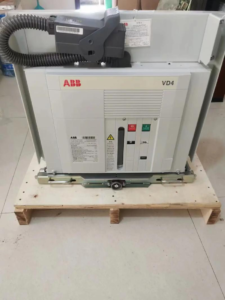
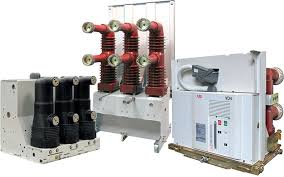
The VD4 Vacuum Circuit Breaker series is offered in three principal voltage classes:
12 kV Vacuum Circuit Breaker
17.5 kV Vacuum Circuit Breaker
24 kV Vacuum Circuit Breaker
These classes dictate insulation geometry, pole spacing, and dielectric coordination.
Global Compatibility
Every VD4 Vacuum Circuit Breaker supports both 50 Hz and 60 Hz operation. This dual-frequency capability allows a single Vacuum Circuit Breaker platform to migrate seamlessly between IEC grids and North American networks without structural compromise.
Insulation Margin: Designing Beyond Nominal
Beyond rated voltage, insulation endurance defines the true resilience of a Vacuum Circuit Breaker:
Power-frequency withstand voltage
Lightning impulse withstand voltage
For the 24 kV Vacuum Circuit Breaker, impulse withstand reaches 125 kV. This margin determines whether the Vacuum Circuit Breaker survives lightning ingress, switching transients, and ferroresonant excursions. Without sufficient insulation coordination, even the most advanced Vacuum Circuit Breaker becomes vulnerable.
2. Current Parameters: The Daily Load and the Ultimate Trial
Current selection governs both routine operation and exceptional survival.
Rated Current — Continuous Endurance of the Vacuum Circuit Breaker
The VD4 Vacuum Circuit Breaker portfolio spans from 630 A to 4000 A.
From auxiliary feeders to hyperscale data halls, each Vacuum Circuit Breaker is dimensioned to sustain thermal equilibrium under continuous stress.
Engineering observation:
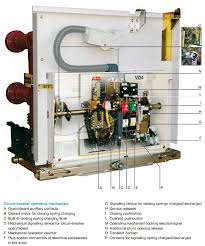
VD4 Vacuum Circuit Breaker models rated 2500 A and above integrate dedicated cooling elements. In high-current applications, the Vacuum Circuit Breaker becomes a thermal system as much as an electrical one.
Short-Circuit Breaking Current — The Combat Rating of the Vacuum Circuit Breaker
This parameter defines the fault-clearing authority of the Vacuum Circuit Breaker.
VD4 Vacuum Circuit Breaker breaking capacities include:
25 kA Vacuum Circuit Breaker
31.5 kA Vacuum Circuit Breaker
40 kA Vacuum Circuit Breaker
50 kA Vacuum Circuit Breaker
Before selection, system studies must calculate the maximum prospective short-circuit current. A Vacuum Circuit Breaker that cannot interrupt decisively becomes a liability rather than a protector.
3. Operating Time: When the Vacuum Circuit Breaker Races Against Physics
Speed is the defining virtue of every Vacuum Circuit Breaker. Delay magnifies thermal stress. Hesitation amplifies electrodynamic shock.
Typical Operating Performance of the VD4 Vacuum Circuit Breaker
Closing time:
24 kV Vacuum Circuit Breaker: 55–70 ms
Other VD4 Vacuum Circuit Breaker models: 55–67 ms
Opening time:
VD4 Vacuum Circuit Breaker: 33–45 ms
Arcing time:
VD4 Vacuum Circuit Breaker: ≤ 15 ms at 50 Hz
These figures ensure that the Vacuum Circuit Breaker extinguishes the arc before destructive energy propagates downstream. Fast interruption protects transformers, preserves motor windings, and confines fault energy within survivable boundaries.
In protection engineering, the speed of a Vacuum Circuit Breaker is not luxury. It is necessity.
4. Environmental Conditions: When the Vacuum Circuit Breaker Meets Geography
Many selection failures originate not in miscalculation, but in environmental neglect.
Altitude — The Silent Adversary of the Vacuum Circuit Breaker
Standard VD4 Vacuum Circuit Breaker ratings assume installation below 1000 m.
Above this altitude, air density declines. Dielectric strength weakens. Partial discharge becomes aggressive.
In high-altitude substations, the Vacuum Circuit Breaker must be derated or specially configured. Otherwise, insulation margins erode invisibly.
Temperature — The Thermal Destiny of the Vacuum Circuit Breaker
Standard ambient range: –5 °C to +40 °C
Beyond this range, the current-carrying capacity of the Vacuum Circuit Breaker must be reduced or forced ventilation introduced. Excess heat shortens contact life, accelerates insulation aging, and undermines mechanical precision.
Humidity — Condensation as the Hidden Enemy
The 24-hour average relative humidity shall not exceed 95%.
In coastal zones and monsoon climates, auxiliary heaters become indispensable companions to the Vacuum Circuit Breaker, preventing condensation, corrosion, and surface tracking.
5.Selection Logic: A Structured Path to the Ideal Vacuum Circuit Breaker
A disciplined sequence simplifies the decision:
Confirm system voltage
Select 12 kV / 17.5 kV / 24 kV Vacuum Circuit Breaker
Determine maximum continuous load
Choose rated current
Apply cooling strategy for high-current Vacuum Circuit Breaker models
Validate short-circuit level
Select 25 kA to 50 kA Vacuum Circuit Breaker
Evaluate environmental conditions
Altitude > 1000 m → apply insulation correction
Temperature > 40 °C → derate or ventilate
6.Closing Reflection
Selecting a VD4 Vacuum Circuit Breaker is not procurement. It is foresight.
Voltage defines eligibility.
Current defines endurance.
Time defines protection.
Environment defines longevity.
When these four dimensions converge, the Vacuum Circuit Breaker transcends hardware. It becomes a sentinel — silent, vigilant, and unwavering.
In the long intervals between faults, that vigilance is the true architecture of reliability.